Alabama says it had no choice. The record says it did.
A rejected plan shows lawmakers could have preserved the Gulf Coast while creating two districts where Black voters held real electoral power.

In 2024, voters in a congressional district stretching from Mobile across the Black Belt elected Shomari Figures. With Terri Sewell representing the 7th District, Alabama sent two Black representatives to Congress in the same election for the first time in state history.
That district will not be on the ballot November 3.
Voters will instead use the map the Legislature passed in 2023. A three-judge federal court has repeatedly ruled against that map, finding that it diluted Black voting strength. On June 2, the U.S. Supreme Court allowed Alabama to use it while the state appeals.
Alabama’s appeal rests on a claim of necessity. The state argues that the lower court effectively required it to split the Gulf Coast and draw districts by race to satisfy the Voting Rights Act. Alabama says the Constitution forbids that, especially after the Supreme Court’s April decision in Louisiana v. Callais. If the state is right, its 2023 map would be hard to fault.
A motion the Singleton plaintiffs filed September 18 disputes that claim, largely using the state’s own admissions.
A map without a majority-Black district
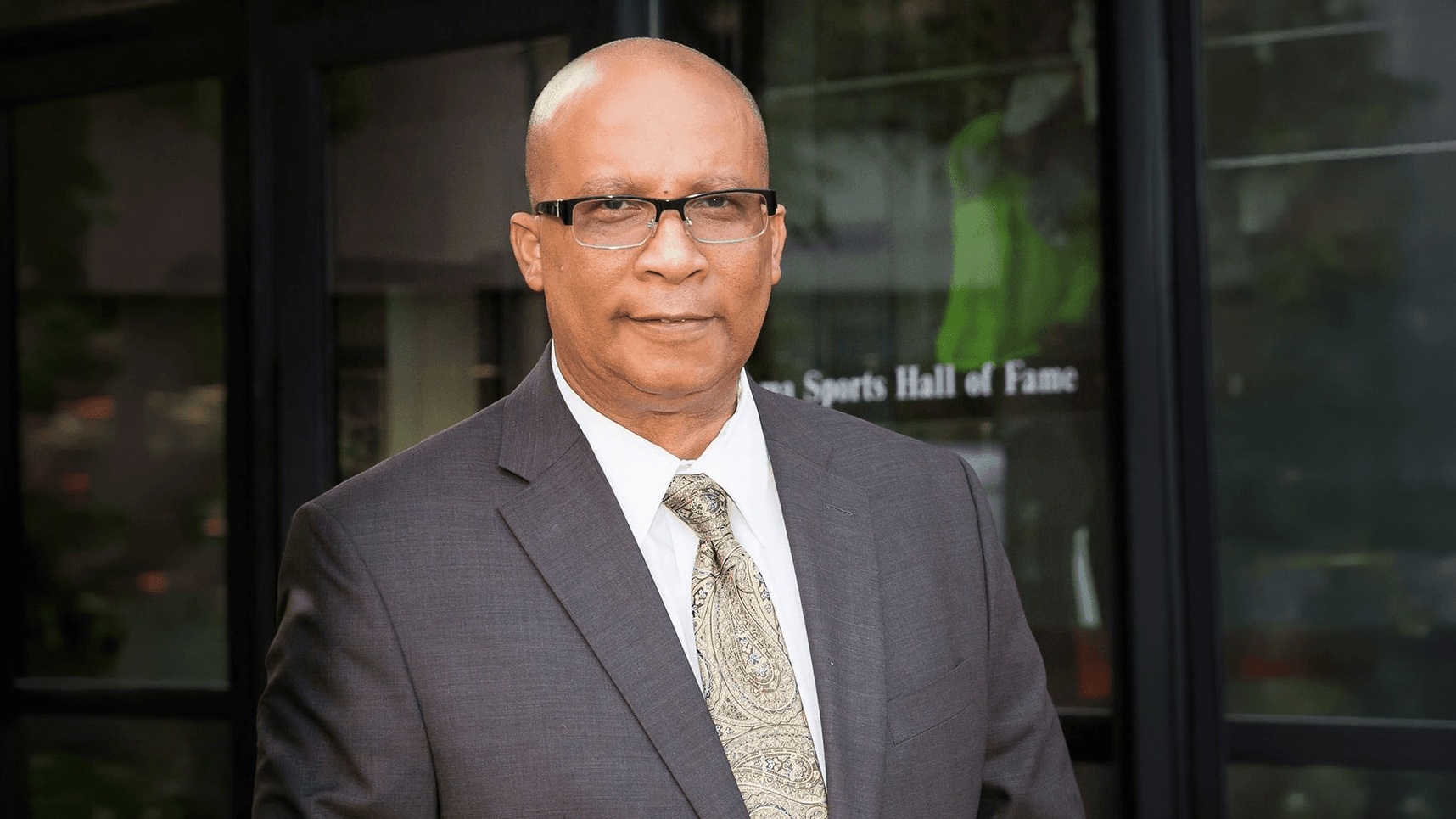
State Senator Bobby Singleton, D-Greensboro, is the Senate minority leader, chairman of the Alabama Democratic Party and lead plaintiff in the case. He offered a congressional plan during a 2023 special session and again in 2026. The Legislature rejected it both times.
Singleton’s plan kept Mobile and Baldwin counties together. It placed 16 of the 18 core Black Belt counties in one district, which the plaintiffs say is the most mathematically possible. It kept the state’s four largest counties whole. It had no majority-Black district.
Even so, Secretary of State Wes Allen formally admitted what the plan would do. In a binding response to a request for admission, Allen acknowledged that the Black-preferred candidate carried the plan’s District 6 in 22 of 28 contested statewide elections from 2012 through 2022, despite its Black voting-age population being below 40 percent. The Black-preferred candidate carried District 7 in all 28. The motion says state Senator Steve Livingston and state Representative Chris Pringle made the same admission.
That is the heart of the dispute. Black voters can join some white voters to elect their preferred candidate without lawmakers drawing lines to meet a racial quota. The plaintiffs say the lower court never demanded one. Its remedy called for either an additional majority-Black district or another district where Black voters had a real opportunity to elect the candidate of their choice.
Past statewide returns do not guarantee a future congressional result. No court has ruled that Singleton’s plan meets every legal requirement, and the plaintiffs say no one was obligated to adopt it. They offer it to show that Alabama had a choice the state now says it never had.
The choice in 2023
The record shows lawmakers saw that choice firsthand.
The Supreme Court ruled against Alabama in Allen v. Milligan in June 2023. Afterward, Livingston and Pringle, who co-chaired the Reapportionment Committee, and their attorney directed cartographer Randy Hinaman to draw a plan with two opportunity districts that kept Mobile and Baldwin together. They gave him no minimum target for Black voting-age population. Trey Hood, an expert for the state, found that the Black-preferred candidate would have led in the second district in two of the four races he modeled. Pringle testified that he believed the plan “would comply with what the Supreme Court ordered.” It passed the House.
Then the process moved behind closed doors. According to the motion, Livingston and other senators met with the state’s solicitor general and excluded Pringle. Livingston testified that the shift followed “some additional information.” He said he did not know what it was, where it came from or who received it. The district court said that testimony “strains credulity.”
On the session’s final morning, lawmakers received a version of Livingston’s plan with one opportunity district. It came with legislative findings that the court said were drafted “in the dead of night.” Livingston said the solicitor general wrote them.
The findings removed a guideline against diluting minority voting strength that the committee had used since the 1990s. For the first time in Alabama history, they declared that keeping Mobile and Baldwin together was nonnegotiable. Yet the two counties had been in separate congressional districts for most years since the Civil War. The plan passed.
According to the plaintiffs, it splits the Black Belt in half.
What judges have found
Courts have examined that choice repeatedly. After blocking the 2023 plan, the district court adopted a map that a special master drew without regard to race. The map followed the Legislature’s own 2023 lines as closely as possible. It produced the district Figures won.
After a 2025 trial, the three-judge panel found that the Legislature knew it needed to create a second opportunity district, could have done so while keeping Mobile and Baldwin together, and “purposefully and admittedly refused to provide that remedy.” One Clinton appointee and two Trump appointees make up the panel.
The Supreme Court vacated that ruling after Callais. The panel then reexamined the record under the new standard. In May, it concluded that the 2023 plan likely violated both the Voting Rights Act and the Fourteenth Amendment and barred its use in 2026. The Supreme Court stayed that order on June 2.
Alabama’s argument, in its own words
The state’s position deserves a fair hearing. In its filing to the Supreme Court, as quoted in the motion, Alabama says the district court held that it violated the Fourteenth Amendment “by declining to draw a race-based plan.” It argues that lawmakers were forced to “subordinat[e] its neutral policies to race.” It also says the plaintiffs “used race as a districting criterion.” In its June 2 order, the Supreme Court described Callais as resolving a tension between the Voting Rights Act and “our colorblind Constitution.” The Legislature’s findings identified the Gulf Coast, the Black Belt and the Wiregrass as communities worth keeping together.
Those are serious arguments. But they hold only if the Legislature had no lawful alternative.
After Callais, the district court reexamined testimony from the plaintiffs’ expert, Dr. Duchin. It again credited her account that she “just did not look at race” when placing district lines. The special master also drew a map without regard to race. And by the state’s own admission, Singleton’s plan produced two opportunity districts without a single majority-Black district.
According to the plaintiffs, Singleton’s plan also kept the Gulf Coast together and more of the Black Belt intact than the state’s map. They say its weakness is that it does not preserve the cores of existing districts. In Milligan, the Supreme Court said a state cannot shield a discriminatory map by pointing to its resemblance to an old one. And Callais itself said it “did not overrule” Milligan.
What the justices decide next
Alabama has asked the justices to take the case or summarily reverse the lower court. A summary reversal would decide the case without full briefing or oral argument. The Singleton plaintiffs counter that the appeal is moot. The injunction applied only to 2026, the election is weeks away, and they say the dispute could go to trial as soon as early 2027. The Milligan plaintiffs filed a similar motion the same day. The Supreme Court’s next conference is Monday.
A dismissal would not declare Alabama’s map unlawful, just as the stay did not declare it lawful. A summary reversal would set aside the lower court’s conclusion that the Legislature likely discriminated intentionally, without the justices hearing oral argument.
Why it matters
Redistricting is often described as a contest between parties. In Alabama, it has tested whether the state will give Black voters the opportunity federal law requires.
The people of the Black Belt and Mobile did what democracy asks of them. They went to court and won. In 2024, they used that opportunity to make history. This November, that opportunity is gone. No court has found the state’s map lawful. The Supreme Court paused the ruling against it, and the calendar ran out.
The power to draw the map belongs to the Legislature, and so does the duty to explain it. Alabama’s leaders say they had no choice. The record says they had several, and they chose the one that left Black voters with less.