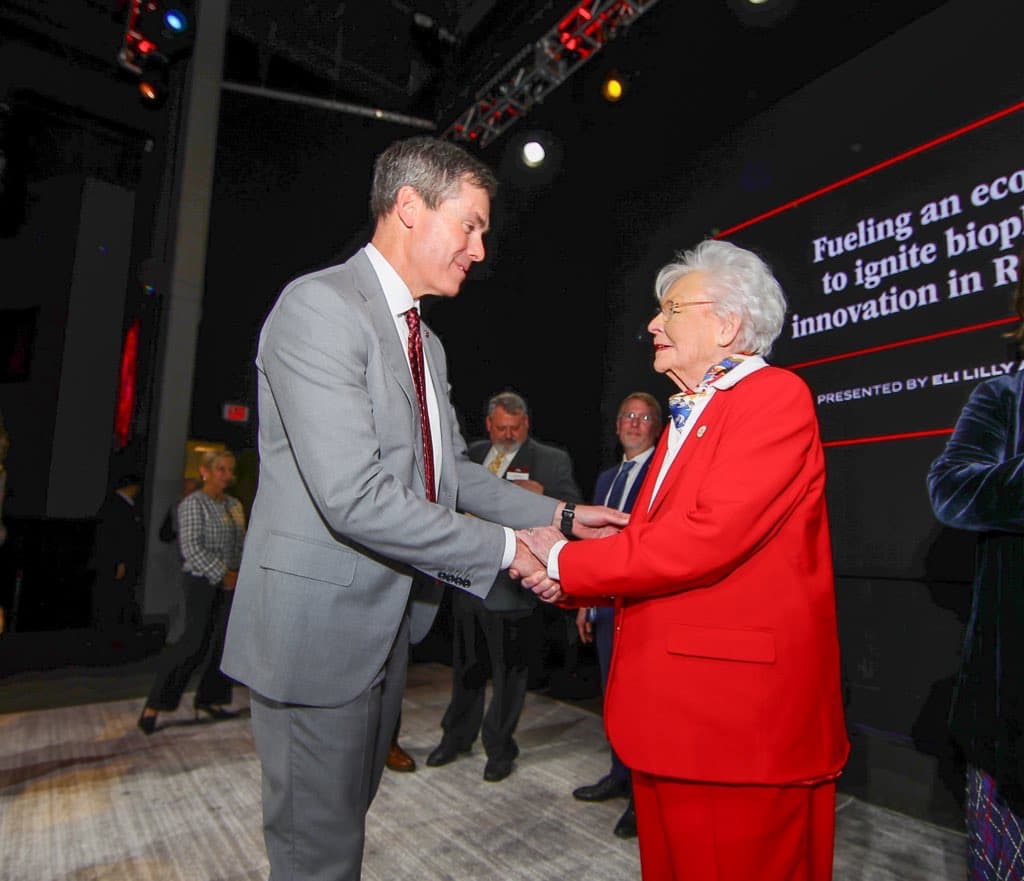
Tuberville releases policy playbook outlining his plans for Alabama
The Republican nominee’s new playbook details proposals for jobs, household savings, education, rural development and measuring results across state government.
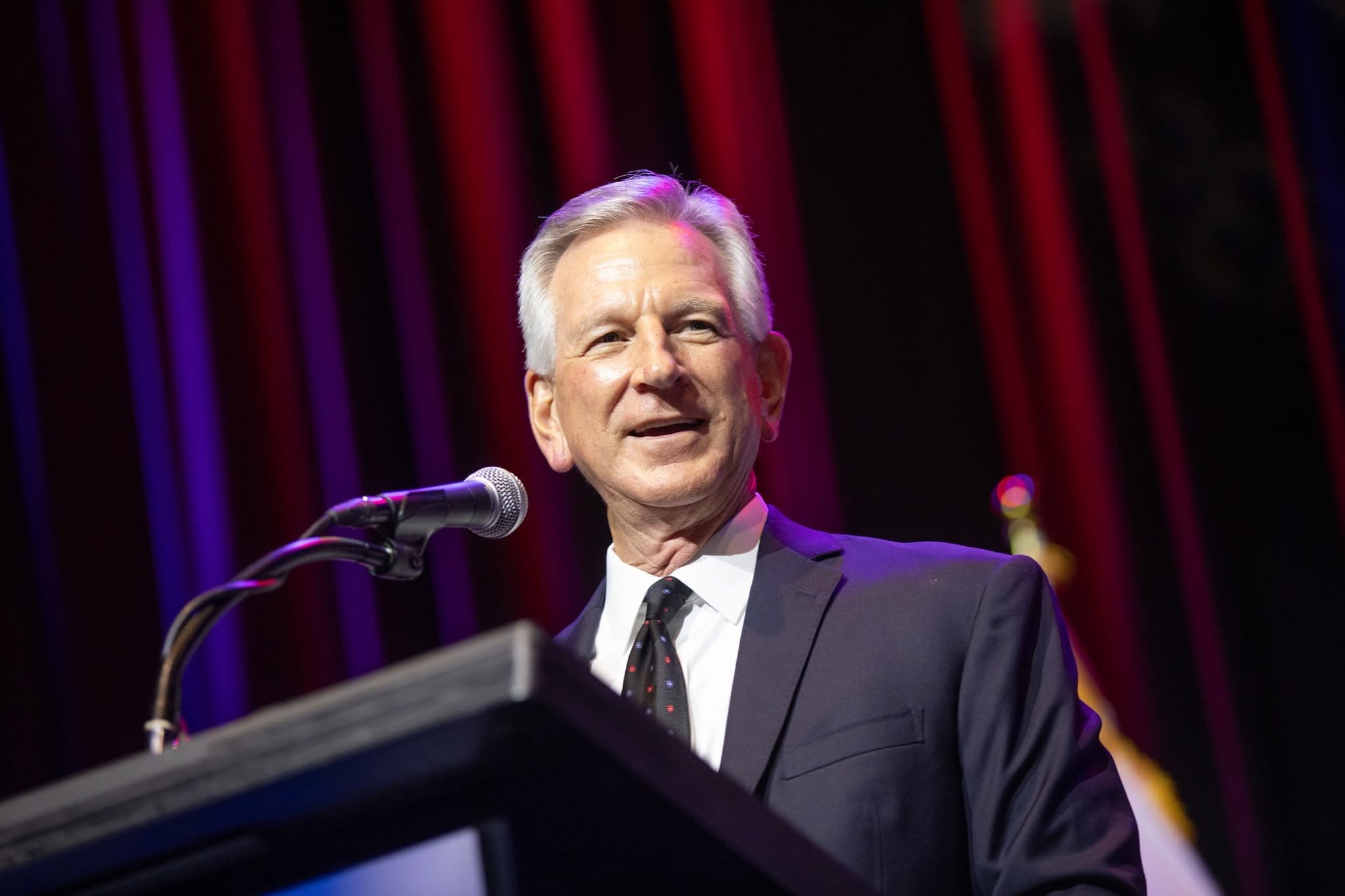
U.S. Senator Tommy Tuberville has released a policy playbook outlining plans to recruit jobs across Alabama, reduce household costs, strengthen education and use government savings to lower taxes if elected governor.
The Republican gubernatorial nominee’s Back to Basics: The Golden Age Playbook connects those priorities to a central goal: helping more Alabamians earn a living, raise their families and build their futures here. It sets out proposed first-day actions, legislation for his first session and commitments for his first term.
Drawing on his coaching career, Tuberville describes an administration built around clear assignments and accountability for the people he recruits, beginning with the governor.
“Spend your money like it’s yours,” Tuberville writes in describing the responsibilities he believes state government should fulfill.
His agenda covers seven areas: jobs, affordability, education, smaller government, public safety, infrastructure and health care.
The economic development plan would give the governor a direct role in recruiting major employers. Each significant prospect would have a designated person responsible for the project and a timetable for decisions. A separate operation would help existing Alabama businesses expand and recruit suppliers serving manufacturers already here.
Tuberville calls for preparing industrial sites with roads, water, sewer and power before companies begin looking, giving rural counties priority. Incentives would emphasize wages and rural investment, with repayment requirements for companies that fail to meet commitments.
His recruitment strategy includes aerospace, defense, automobile manufacturing, shipbuilding, agriculture, forestry and logistics, alongside corporate headquarters, pharmaceuticals and businesses growing from Alabama research institutions.
He sets a first-term target of $20 billion in investment, counted when facilities are built and hiring begins.
“Announcements don’t pay the bills. Paychecks do,” the playbook states.
Household costs and tax relief
The proposed Family Affordability Act would combine several priorities in one package for Tuberville’s first legislative session: eliminating the state grocery tax, reducing income taxes in steps during his first term, providing property tax relief beginning with seniors and protecting electricity customers from costs associated with large industrial users.
The property tax proposal would begin with a freeze on increases for homes occupied by seniors. Tuberville says he would develop the measure with counties to protect homeowners while preserving local budgets.
The package also addresses child care assistance. Tuberville describes a parent receiving a raise but losing assistance worth more than the additional pay. He would phase assistance down as earnings rise, seeking to ensure that increased wages leave a family better off. He also would continue and expand tax credits supporting employers and providers that increase child care availability.
For homeowners, he proposes expanding the Strengthen Alabama Homes fortified roof program, enforcing required insurance discounts and attracting additional insurers, particularly along the coast.
His energy proposals would extend a base rate freeze and require data centers and other large users to pay the infrastructure costs they create. The playbook calls for ending data center tax breaks, placing the facilities in the highest property tax class and requiring developers to cover needed power lines, substations and water systems, along with replacing the power and water capacity they use.
Tuberville also pledges to respect communities that decline such developments. A proposed State Energy Bank would have up to $1 billion in bonding authority to attract federal and private investment for electricity infrastructure, with large users repaying the financing.
Connecting classrooms with careers
Tuberville’s education agenda begins with reading, writing and mathematics and connects those foundations to college, military service and skilled employment.
He proposes fully funding First Class Pre-K, with a first-term goal of a seat for every family seeking one. Reading and mathematics initiatives would extend through eighth grade, supported by instructional coaches and tutoring. Experienced teachers could earn more by mentoring colleagues, beginning in middle schools with the greatest need.
The proposed Alabama Life Ready Act would establish career planning milestones: an interest identified by eighth grade and a path chosen by 10th grade. High school technical programs would connect with community colleges so students could continue their training without starting over.
Tuberville calls for opportunities for every junior and senior to earn college credit or an industry credential before graduation. Regional technical centers would allow districts to share specialized facilities, with employers helping develop programs, internships and apprenticeships.
Community colleges would anchor workforce training for students and adults preparing for different careers. Tuberville proposes training workers ahead of the industries Alabama is recruiting and measuring programs by employment, wages and whether graduates remain employed a year later.
The agenda also supports the CHOOSE Act, parental involvement and school accountability, with education and employment results published by county.
Rural development and health care
Tuberville links rural recruitment with the infrastructure and services communities need to attract employers and retain families. His proposals include help for small-town water and sewer systems, private partnerships where possible and deadlines for broadband providers.
On transportation, he pledges a funded plan and budget in his first year to widen Interstate 65 to three lanes in each direction from the Tennessee line to Mobile. Road and bridge projects would receive public scores emphasizing job growth and safety, accompanied by a long-term work plan.
He also would promote the Port of Mobile during trade missions, attract additional shipping services and support inland ports linked by rail. Companies receiving state incentives would be encouraged to ship through Mobile when the business case supports it.
The health care agenda calls for reforming the certificate-of-need process, setting decision deadlines and emphasizing community needs when considering new facilities. Other proposals include expanded telehealth, additional medical residency positions outside major cities and loan repayment for physicians who remain in rural communities.
Tuberville says he would not expand Medicaid. Instead, he would seek additional federal rural health support and flexibility in administering the existing program, strengthen fraud enforcement and direct the state’s recovered dollars back into care.
Public safety and child protection
Tuberville proposes additional troopers, recruitment incentives, a statewide gang unit and state assistance for local departments confronting violent crime. His proposed Safe Streets Act would address sentencing for violent offenders, impose prison terms for recruiting children into gangs and establish authority for state support to local agencies.
Child protection proposals include expanded background checks, additional investigators targeting online predators and greater access to child advocacy centers. He also calls for stronger parental control over children’s social media use.
Other commitments include greater cooperation with federal immigration enforcement and tighter restrictions on abortion pills delivered into Alabama.
First actions, funding and accountability
Tuberville identifies agency audits, a hiring freeze outside public safety and direct care, and a freeze on new agency fees among his proposed first-day actions. Agencies under the governor’s authority would publish strategic plans and performance measures within 90 days, with a broader efficiency review completed within a year.
His first-session legislative agenda includes packages addressing household costs, jobs, education, public safety and health care access. His first budgets would support priorities including workforce training and the Interstate 65 widening plan.
He proposes merging at least a dozen agencies during his first term, with legislation to carry out the mergers, and consolidating payroll, purchasing, technology and other administrative functions.
Workforce reductions would primarily come from leaving some departing employees’ positions unfilled, with layoffs a last resort. Troopers, correctional officers and direct-care personnel would be exempt, and the proposal would not apply to local schoolteachers.
The playbook estimates $150 million to $200 million in annual savings once workforce, administrative and contract changes are fully implemented. Tuberville proposes independent verification and quarterly reporting of savings, which, alongside economic growth, would finance income tax reductions while protecting education funding.
For infrastructure and development, he calls for private partnerships and federal support where available. His budget principles reject financing tax cuts with borrowed money or using temporary revenue for recurring spending.
The playbook closes with first-term targets including 60 percent labor force participation, $20 billion in realized investment, top-25 eighth-grade reading and mathematics rankings, and no rural hospital closures during his administration.
Tuberville proposes posting the goals on a public scoreboard within 90 days, updating it as results become available and using subsequent State of the State addresses to report on the commitments.
“Hold me to it,” he writes.