Alabama joins Supreme Court fight over religious school vaccine exemptions
Alabama already allows religious exemptions. The West Virginia dispute asks when the Constitution requires states to provide them.

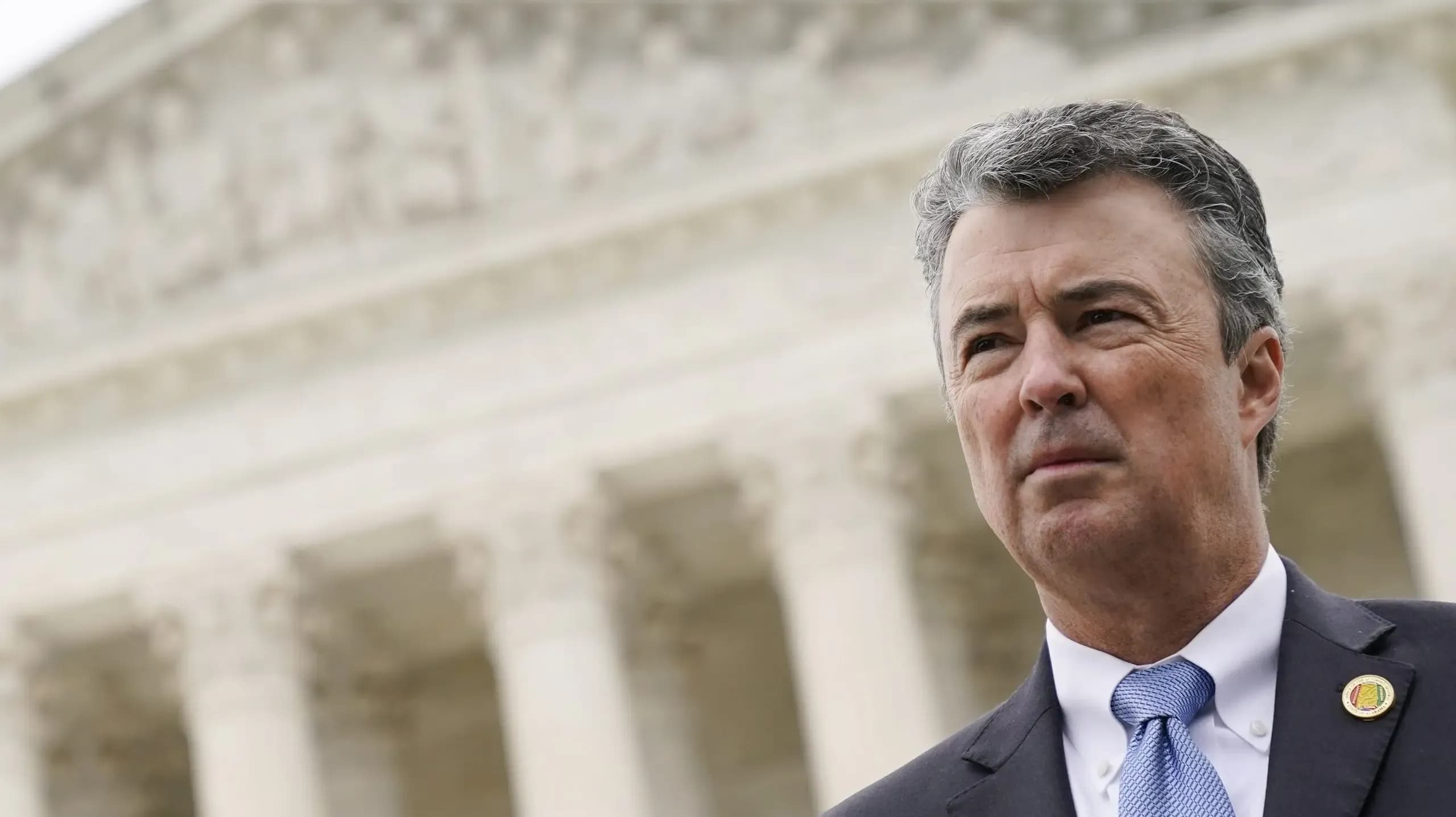
Alabama Attorney General Steve Marshall has joined a multistate effort asking the U.S. Supreme Court to hear a religious challenge to West Virginia's school vaccination requirements involving a child who attends public school online.
Marshall announced Alabama's participation Monday, saying the case forces a family to choose between public education and religious beliefs. Alabama already allows religious exemptions from school vaccination requirements. The lawsuit asks whether the Constitution requires an accommodation for a West Virginia child receiving public instruction at home.
"No family should have to choose between their child's public education and their faith, yet that is exactly what the Perry family is being forced to do," Marshall said.
The Nebraska-led coalition of 16 states supports Krystle and Anthony Perry, whose daughter was disenrolled from the Upshur County Virtual School because she was not fully vaccinated. The parents object to certain vaccinations because of their Christian beliefs concerning abortion and the use of fetal-derived cells in vaccine development.
The coalition filed its brief October 13, according to the Supreme Court docket. The justices have not agreed to hear the case. School officials' response to the family's petition is due November 12.
Marshall's announcement said lower courts rejected the family's case. The family initially won a preliminary injunction allowing their daughter to reenroll while the lawsuit proceeded, but a divided 4th U.S. Circuit Court of Appeals reversed that protection April 8.
The majority concluded that West Virginia's vaccination law was neutral and generally applicable. It distinguished medical exemptions from religious exemptions, reasoning that protecting children whom vaccination could harm serves the law's public health purpose, while expanding nonmedical exemptions increases susceptibility to disease.
The family's argument also rests on the school's online format. West Virginia does not impose the same vaccination requirement on some other children educated at home. In his dissent, Judge Paul Niemeyer argued that accommodating the Perrys' daughter would protect religious exercise without materially undermining disease prevention.
Although instruction takes place online, court filings indicate that students must attend periodic testing in person and may participate in extracurricular activities.
A separate brief supporting the family, filed by West Virginia Governor Patrick Morrisey and state Health Secretary Dr. Arvin Singh, acknowledges those contacts and their relevance to public health. The officials argue, however, that occasional attendance should not be treated as equivalent to daily classroom instruction. They urge the justices to assess students' actual exposure risks rather than rely on the program's public school designation.
The appeals court majority concluded that virtual students' lower exposure risks did not eliminate those risks or deprive lawmakers of discretion to establish vaccination rules.
The coalition cites the Supreme Court's recent decisions on parents' religious rights, including Mahmoud v. Taylor, to argue that access to public education cannot depend on accepting an unconstitutional burden on religious practice. Its brief acknowledges a compelling government interest in preventing disease but argues that accommodating this family would not defeat that interest.
West Virginia officials remain divided over religious exemptions. Morrisey directed health officials in 2025 to establish an exemption process. His office said in May that the state Board of Education had directed county school systems not to honor the resulting exemption letters. The health department's website continues to provide application instructions for the 2026-27 school year.
Marshall's office described the parents' objection as involving vaccinations "developed from the remains of aborted fetuses."
According to the American Academy of Pediatrics, some vaccines use laboratory cell lines originating from pregnancies terminated decades ago. Their continued use does not require new abortions, and purification removes fetal tissue from finished vaccines.
The cell lines' historical origins are distinct from the vaccines' contents, though that distinction does not resolve the family's religious objection to the historical connection.
In Alabama, parents seeking a school religious exemption must submit a written objection to a county health department and receive education about the consequences of not immunizing their child, according to the Alabama Department of Public Health. Marshall's participation in the brief does not change that process.
The Supreme Court must first decide whether to hear the case. If it does, the justices would weigh the family's claim to religious accommodation against the public health justification for applying vaccination requirements to students who receive most of their instruction at home.